

The origins of Orange can't be missed. This town in the south of France has been classified as a UNESCO World Heritage Site for its extraordinary Roman monuments.


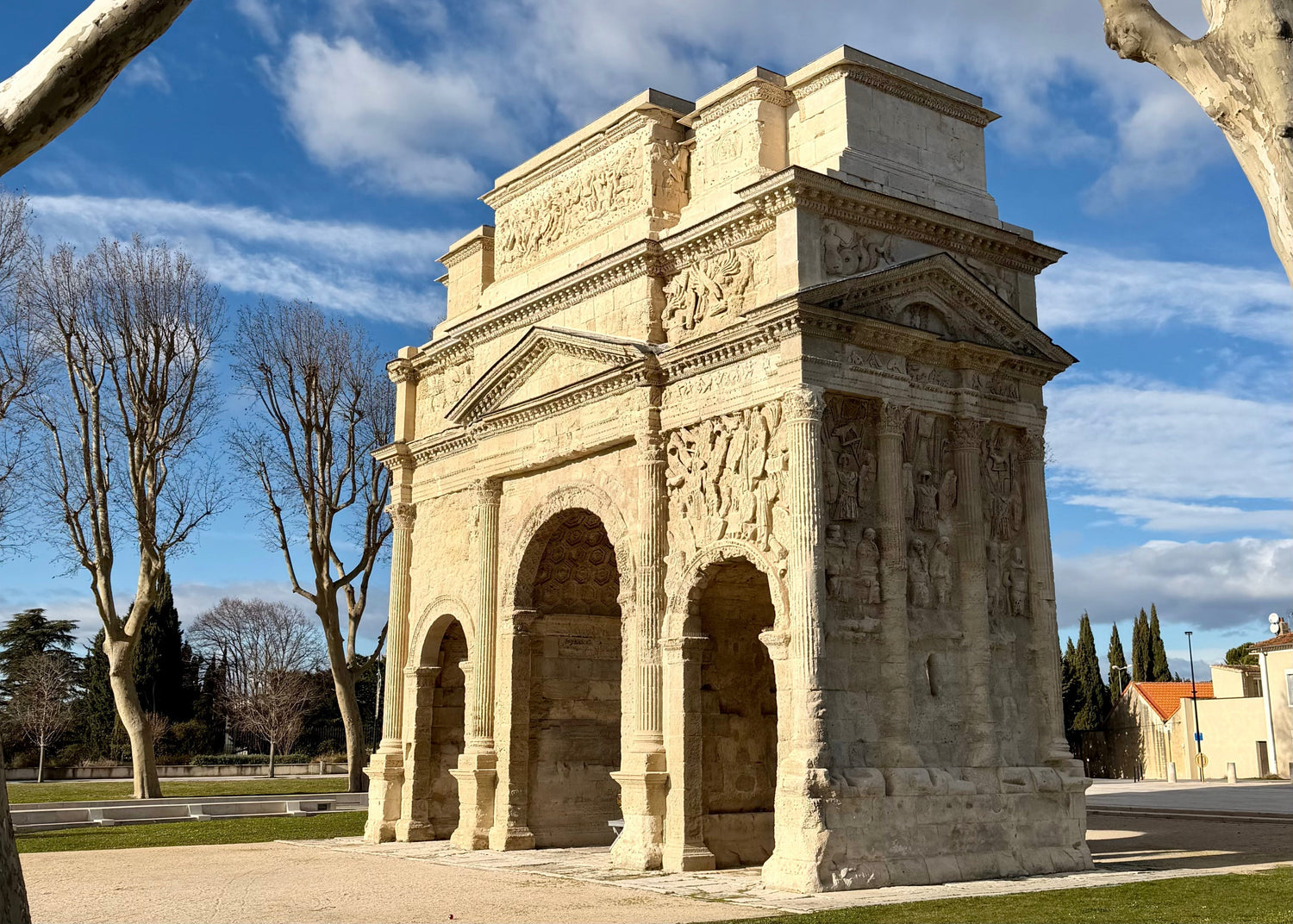
Coming from the north, the Arch of Tiberius stops you in your tracks. This was a gate leading to the center village that has been standing in its spot for nearly 2,000 years. It was built to honor the veterans of the Gallic campaigns in the spread of the Roman Empire in the 1st century AD. Orange, at this time, was a Roman colony for former soldiers.

The arch isn't decorative. Its carved reliefs are crowded with shields, helmets, weapons, bound captives, war emblems. It is a monument to victory - to celebrate an Empire that was voracious in its hunger for territory.

Imagine arriving here on foot at that time. Suddenly, a massive stone gateway rises up and tells you exactly who is in charge. Today, the road has never stopped being a road. The reminder remains, even if the Empire is long gone.

A short walk away stands the other great Roman monument: the Théatre Antique d'Orange, built during the reign of Augustus in the 1st century AD. The theater also speaks of power, but in a subtler form...not through weaponry, but through culture.
The theater could hold 9,000 spectators, a staggering number for the time. The main stage wall stands 37 meters high - and is one of the best preserved in the Roman world. Louis XIV famously called it, "the most beautiful wall in my kingdom."

In Roman times, this wall was not bare stone. It was painted, colored, covered in statues. Performances were tragedies, comedies, musicals, pantomimes. The whole city came together here, the wealthiest sitting in the closest seats to the stage and the rest climbing higher and higher. The acoustics are evidence of brilliant Roman engineering, as a voice from the stage carries easily up to the highest seat.


The theater is still used today. Summer concerts and plays are put on and the theater fills, 2,000 years later. The Roman Empire may have fallen, but this town is still organized by, and feels the power, of its vision.


