
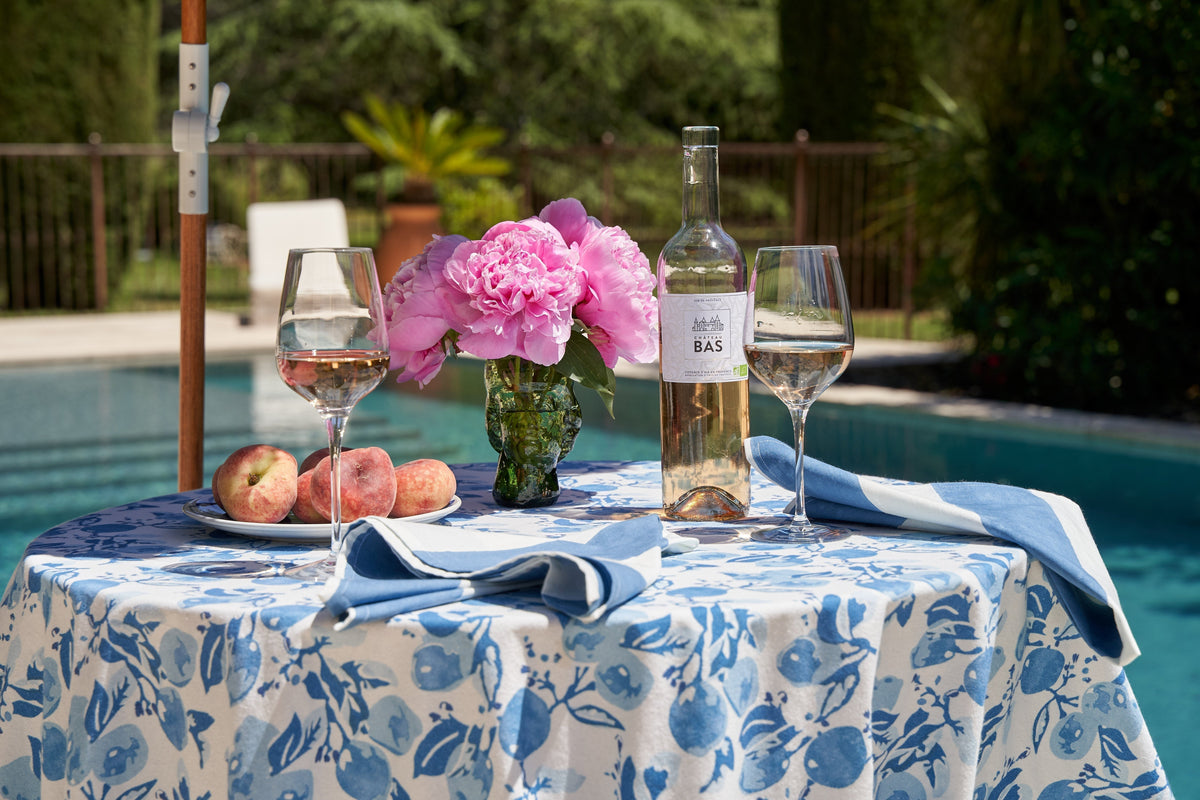

It's rosé season in Provence! The story of rosé begins in Provence...more than 2,600 years ago. Greek sailors founded the city of Massalia - what is Marseille today. They brought grapevines with them and planted them in the region. Provence was truly France's first wine territory.
Interestingly, these ancient wines resembled today's rosé in color, as winemakers at the time did not yet practice the long skin macerations that create deep-red varieties. Red grapes were pressed quickly, producing pale pink wines. This is still the process to create rosé.

Although Provence does produce reds and whites, the region has gradually specialized in rosé - especially during the twentieth century. Today, roughly 90% of Provence's wine production is rosé. The Mediterranean climates is perfect for producers to create pale, dry, elegant wine.

Most Provençal rosés are blends rather than single variety wines. The main grapes are:
- Grenache: red berry fruit and roundess
- Cinsault: freshness and floral notes
- Syrah: structure and spice
- Mourvèdre: depth and complexity
- Tibouren: old Provençal variety that adds herbal and Mediterranean notes
- Rolle: white grape often blended in small amounts for freshness and citrus notes

When you serve rosé, do you employ the piscine method?
The word piscine in French means swimming pool...in the context of rosé in southern France, it refers to a generously sized glass, filled with ice and then rosé. It is practically synonymous with summer afternoons in Provence and the Côte d'Azur. Think Brigitte Bardot in Saint-Tropez in the 1960's.

In Provence, rosé is rarely served outside of the sweet months of summer when days are long and the sun is at its zenith. It is part of the art of living well in this region.

Our beautiful Citron Bleu Collection is featured on the table here.


